Exchanges within the “Spaces of Freedom” Project: Strengthening Independent Cultural Centers Through Practice
Exchanges among representatives of independent socio-cultural centers, implemented within the “Spaces of Freedom” project, have once again confirmed the importance of direct encounters, stays in different local communities, and learning through practice for strengthening local initiatives and building a sustainable network of free spaces across Serbia. Instead of formal training sessions, these exchanges enabled participants to gain first-hand insight into the work methods, programs, and everyday challenges of spaces that have been operating outside institutional frameworks for years.
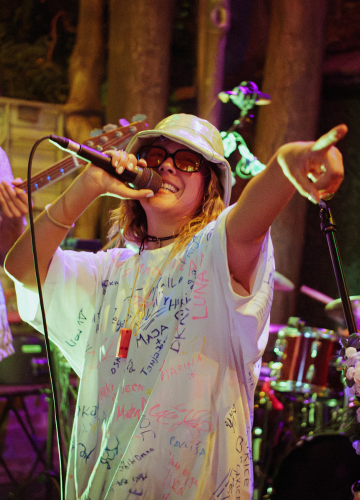
During December, exchange participants stayed at the Alternative Cultural Center Gnezdo in Kruševac, where they had the opportunity to become familiar with the organization of a diverse program — ranging from music events and support for young bands to workshops, tournaments, and activities aimed at different generations. Gnezdo proved to be an example of a space that simultaneously functions as a cultural center, a meeting place, and a pillar of support for the local community. The exchange opened space for sharing practical knowledge on program management, technical equipment, audience engagement, and long-term planning of an independent center.
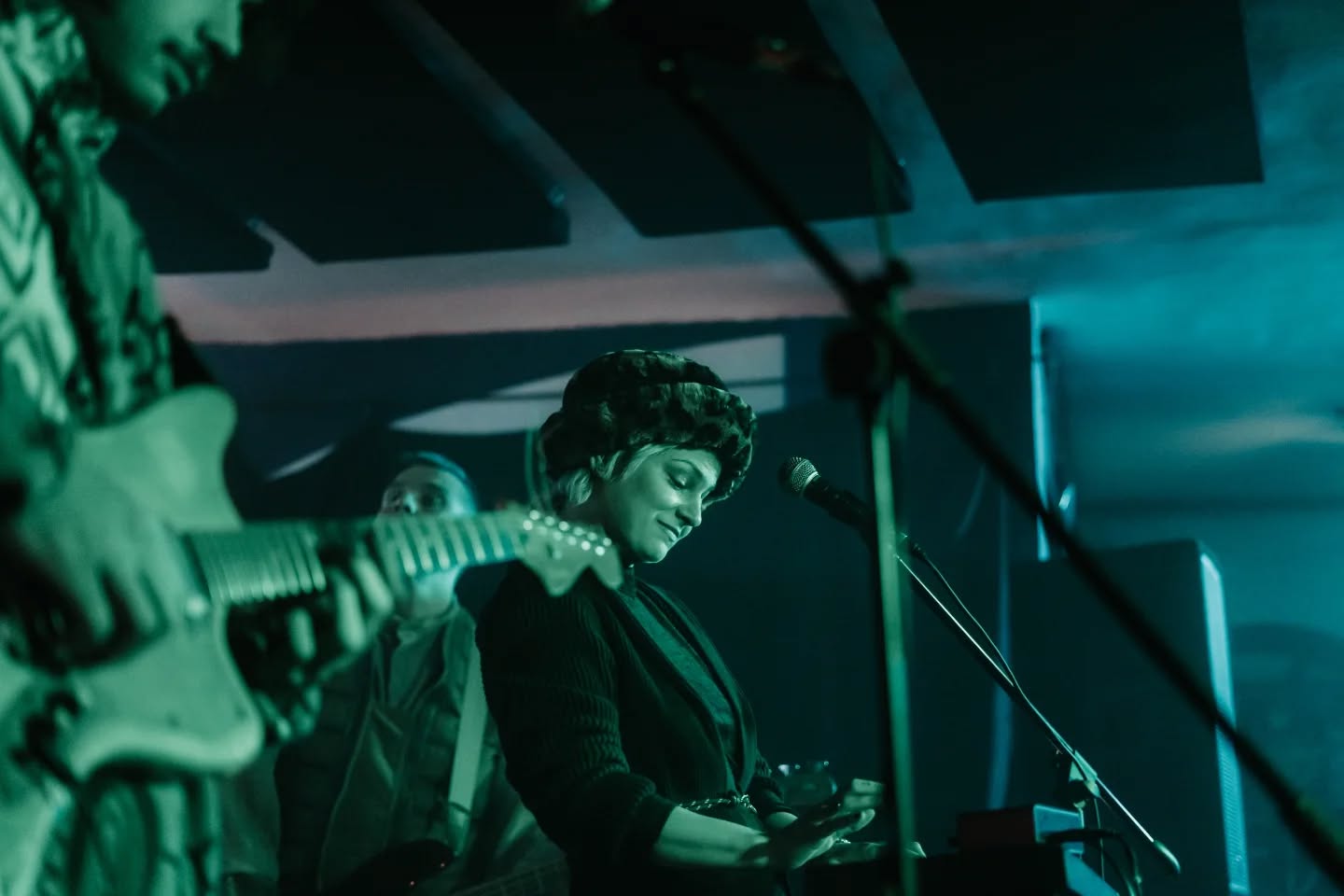
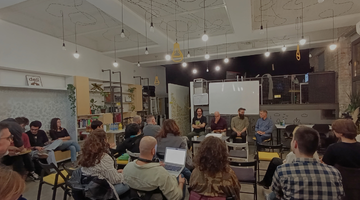
A similar impression was made during the visit to the Youth Center in Zaječar, where participants from other cities had the opportunity to take part in cultural, artistic, and humanitarian activities, as well as to exchange experiences related to event organization, coordination, and promotion. Special emphasis was placed on the importance of having an open space that continuously produces content relevant to the local community and encourages active citizen participation.
One of the exchanges also took place at the Youth Center CK13 in Novi Sad, where a multi-day stay provided insight into the intensive rhythm of work within an autonomous space that simultaneously serves as a venue for concerts, workshops, and seminars, as well as an open infrastructure for various organizations, students, and informal groups. Participants learned how CK13 functions as a living organism of the community — a space where culture, social engagement, solidarity, and political education intertwine in everyday practice.
The common denominator of all exchanges was the sharing of knowledge, contacts, and experiences, accompanied by a strong sense of encouragement and motivation. Participants emphasized that staying in these spaces helped them better understand their own initiatives, identify the next steps in their development, and strengthen the belief that creating spaces of freedom is possible even under conditions of limited resources.
Exchanges within the “Spaces of Freedom” project once again demonstrated that independent socio-cultural centers do not function as isolated islands, but rather as a network of mutual support, solidarity, and shared learning. Through such encounters, knowledge ceases to be abstract, and experience becomes a practical tool for creating new spaces of freedom in other cities and communities.
The exchanges are held as part of the “Spaces of Freedom” project, supported by the European Union. The project is implemented by the Zaječar Initiative in partnership with the Youth Center CK13 (Novi Sad), UG Fakiri s juga - the Alternative Cultural Center Gnezdo (Kruševac), and the K-Town Group (Kosjerić).